National NAACP Chairman Julian Bond gave an amazing speech in support of LGBT rights at HRC’s Los Angeles Gala Dinner on Saturday, March 14. Check the video out below!!!
Showing posts with label Marriage. Show all posts
Showing posts with label Marriage. Show all posts
Tuesday, March 17


Wednesday, January 14
Marriage: The Time Is Now
News sources are reporting that a legislator in Vermont is preparing to introduce legislation that will secure marriage rights for the lesbian and gay community:
You can find the rest of the article after the jump...
AUGUSTA, Maine—The gay marriage issue moved onto the legislative agenda Tuesday as supporters of the idea said this is the time to recognize marriages between same-sex couples -- even if the debate comes amid major concerns in the State House over budget cutbacks and their impact.
Sen. Dennis Damon said he is introducing a bill to rewrite Maine's existing statute that defines marriage as between one man and one woman, instead defining it as a union between two people. In addition, it recognizes gay marriages from other states.
Damon, D-Trenton, answered critics who questioned the timing of the bill as lawmakers face a $838 million shortfall by saying it's "long overdue."
"Currently there is discrimination. Heterosexual couples who have decided to spend their lives together are treated differently than same-sex couples who have ... that same commitment to each other," Damon said. "I don't see the fairness of that. I don't see the need for that, and this bill will put an end to that."
You can find the rest of the article after the jump...
Friday, November 14
Gay is the New Black

Check out this interesting article in the Advocate! Provocative title but great writing:
By Michael Joseph Gross
Excerpted from The Advocate November 12, 2008
The night before Election Day, a black woman walked into the San Francisco headquarters of the No on Proposition 8 campaign. Someone had ripped down the No on 8 sign she’d posted in her yard and she wanted a replacement. She was old, limping, and carrying a cane. Walking up and down the stairs to this office was hard for her.
I asked why coming to get the sign was worth the trouble, and she answered, “All of us are equal, and all of us have to fight to make sure the law says that.” She said that she was straight, and she told me about one of the first times she ever hung out with gay people, in New Orleans in the 1970s. “I thought I was so cool for being there, and I said, ‘You faggots are a lot of fun!’ Well, that day I learned my lesson. A gay man turned on me and said, ‘A faggot is not a person. A faggot is a bunch of sticks you use to light a fire.’ ”
The combination of Obama’s win and gay people’s losses inflicted mass whiplash. We were elated, then furious. I’d spent the week in the No on Prop. 8 office in the Castro, a neighborhood where our defeat was existential. For the next few days, wherever I went -- barbershop, grocery store, gym, bars -- I heard people talk of almost nothing else.
The next day, Barack Obama was elected president, and gay marriage rights in California were taken away. At the same time, Arizona voters amended their state constitution to preemptively outlaw gay marriage. Florida went further, outlawing any legal union that’s treated as marriage, such as domestic partnerships or civil unions. Arkansas passed a vicious law denying us adoption rights.
You can find the rest after the jump...
Thursday, November 6
You can’t take this away from me: Proposition 8 broke our hearts, but it did not end our fight.
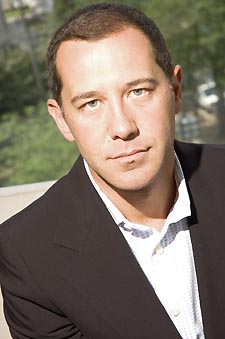
An Op-Ed from Joe Solmonese, President of HRC:
Like many in our movement, I found myself in Southern California last weekend. There, I had the opportunity to speak with a man who said that Proposition 8 completely changed the way he saw his own neighborhood. Every “Yes on 8” sign was a slap. For this man, for me, for the 18,000 couples who married in California, to LGBT people and the people who love us, its passage was worse than a slap in the face. It was nothing short of heartbreaking.
But it is not the end. Fifty-two percent of the voters of California voted to deny us our equality on Tuesday, but they did not vote our families or the power of our love out of existence; they did not vote us away.
As free and equal human beings, we were born with the right to equal families. The courts did not give us this right—they simply recognized it. And although California has ceased to grant us marriage licenses, our rights are not subject to anyone’s approval. We will keep fighting for them. They are as real and as enduring as the love that moves us to form families in the first place. There are many roads to marriage equality, and no single roadblock will prevent us from ultimately getting there.
And yet there is no denying, as we pick ourselves up after losing this most recent, hard-fought battle, that we’ve been injured, many of us by neighbors who claim to respect us. We see them in the supermarkets, on the sidewalk, and think “how could you?”
By the same token, we know that we are moving in the right direction. In 2000, California voters passed Proposition 22 by a margin of 61.4% to 38.6%. On Tuesday, fully 48% of Californians rejected Proposition 8. It wasn’t enough, but it was a massive shift. Nationally, although two other anti-marriage ballot measures won, Connecticut defeated an effort to hold a constitutional convention ending marriage, New York’s state legislature gained the seats necessary to consider a marriage law, and FMA architect Marilyn Musgrave lost her seat in Congress. We also elected a president who supports protecting the entire community from discrimination and who opposes discriminatory amendments.
Yet on Proposition 8 we lost at the ballot box, and I think that says something about this middle place where we find ourselves at this moment. In 2003, twelve states still had sodomy laws on the books, and only one state had civil unions. Four years ago, marriage was used to rile up a right-wing base, and we were branded as a bigger threat than terrorism. In 2008, most people know that we are not a threat. Proposition 8 did not result from a popular groundswell of opposition to our rights, but was the work of a small core of people who fought to get it on the ballot. The anti-LGBT message didn’t rally people to the polls, but unfortunately when people got to the polls, too many of them had no problem with hurting us. Faced with an economy in turmoil and two wars, most Californians didn’t choose the culture war. But faced with the question—brought to them by a small cadre of anti-LGBT hardliners – of whether our families should be treated differently from theirs, too many said yes.
But even before we do the hard work of deconstructing this campaign and readying for the future, it’s clear to me that our continuing mandate is to show our neighbors who we are.
Justice Lewis Powell was the swing vote in Bowers, the case that upheld Georgia’s sodomy law and that was reversed by Lawrence v. Texas five years ago. When Bowers was pending, Powell told one of his clerks “I don’t believe I’ve ever met a homosexual.” Ironically, that clerk was gay, and had never come out to the Justice. A decade later, Powell admitted his vote to uphold Georgia’s sodomy law was a mistake.
Everything we’ve learned points to one simple fact: people who know us are more likely to support our equality.
In recent years, I’ve been delivering this positive message: tell your story. Share who you are. And in fact, as our families become more familiar, support for us increases. But make no mistake: I do not think we have to audition for equality. Rather, I believe that each and every one of us who has been hurt by this hateful ballot measure, and each and every one of us who is still fighting to be equal, has to confront the neighbors who hurt us. We have to say to the man with the Yes on 8 sign—you disrespected my humanity, and I am not giving you a pass. I am not giving you a pass for explaining that you tolerate me, while at the same time denying that my family has a right to exist. I do not give you permission to say you have me as a “gay friend” when you cast a vote against my family, and my rights.
Wherever you are, tell a neighbor what the California Supreme Court so wisely affirmed: that you are equal, you are human, and that being denied equality harms you materially. Although I, like our whole community, am shaken by Prop 8’s passage, I am not yet ready to believe that anyone who knows us as human beings and understands what is at stake would consciously vote to harm us.
This is not over. In California, our legal rights have been lost, but our human rights endure, and we will continue to fight for them.
Monday, October 27
Gay priest is true to his faith, at odds with his church

Steve Lopez of the LA Times writes about Father Geoffery Farrow, a Catholic priest that came out as gay and in opposition to Proposition 8 (the discriminatory Calif. ballot measure that would strip marriage rights from gay couples).
So who is this Catholic priest from Fresno who stood up and spoke out against Proposition 8, putting his career on the line? As a gay man who finds the church's views on homosexuality so objectionable, why has he been a priest for more than 20 years and subjected himself to such moral conflict?
After reading my colleague Duke Helfand's story about Father Geoffrey Farrow and his recent career-suicide from the pulpit, I was curious.
Farrow agreed to meet me for lunch in the middle of a schedule that's gotten very busy since he became persona non grata to his employer. He's been asked to appear all over the state for rallies against Prop. 8, which would amend the California Constitution to say marriage can only be between a man and a woman.
Father Farrow, who was suspended by his bishop two weeks ago, strolled into the lobby of the Kyoto Grand Hotel in downtown Los Angeles wearing the collar.
"I'm still a priest," he said over lunch, though he fully expected to be disciplined for speaking to his congregation about Prop. 8 and wouldn't be surprised if he's ultimately fired.
For the moment, he's staying with friends in Los Angeles. Farrow, 50, doesn't know what he'll do after the election. He was suspended without pay and said his medical benefits run out at the end of the month.
Find the complete article after the jump...
Tuesday, October 14
Separate is not Equal
This New York Times editorial draws on one of the tenants of the 1950's and 60's civil rights movment:

Find the original article after the jump...
With a 4-to-3 ruling on Friday that granted gay and lesbian couples the right to marry, the Connecticut Supreme Court ended a serious injustice within its own borders, and the national debate over the issue was catapulted forward. The ruling made Connecticut the third state to legalize same-sex marriage, following Massachusetts in 2004 and California in May.
Connecticut’s Supreme Court was considering a ruling by a lower court that found that there was no denial of equal protection in excluding gay people from the institution of marriage. The lower court cited supposedly comparable protections and benefits afforded by the state’s civil-unions law. The Supreme Court’s decision correctly rejects that standard, which is the same as the excuse of separate but equal once used to rationalize racial segregation.
Justice Richard Palmer wrote in the majority opinion that segregating heterosexual and homosexual couples into different institutions constitutes a “cognizable harm” in light of “the history of pernicious discrimination faced by gay men and lesbians, and because the institution of marriage carries with it a status and significance that the newly created classification of civil unions does not embody.”
Because of that history of discrimination, the decision properly treats sexual orientation as a “suspect classification” entitled to the sort of heightened legal scrutiny applied to distinctions based on race or sex.
The new ruling is especially timely. Californians are about to vote on a ballot initiative that in effect overturns the May ruling that gave gay people the right to marry. Its message about the unfairness of treating the relationships of same-sex couples as somehow inferior needs to be taken to heart.

Find the original article after the jump...
Tuesday, September 9
Palin supporters, black Obama voters will help pass Florida's gay marriage ban
Mary Ellen Klas
Miami Herald
TALLAHASSEE -- The ballot measure to ban same-sex marriage in Florida continues to be in trouble, a new poll released Monday by Quinnipiac University found, so promoters are now pinning their hopes on presidential politics to push them over the top.
The poll found Florida voters support the same-sex marriage ban by 55-41 percent, but that falls short of the 60 percent needed to become law.
Supporters say that both Sarah Palin, the right-leaning Alaskan governor credited for firing up the Republican's conservative base, and the historic candidacy of Democrat Barack Obama will bring out more proponents of Amendment 2.
''Palin may turn out more conservative voters who might have stayed home,'' said Steve Strang, founder of Orlando-based Charisma Magazine for evangelicals. ``If they support Sarah Palin, they most likely will vote on this amendment.''
OBAMA SUPPORTERS
Meanwhile, Obama will draw black voters ''who know and understand this issue,'' said John Stemberger, president and general counsel of the Florida Family Policy Council, which is promoting the Yeson2 campaign.
The poll of 1,427 Florida voters was conducted Sept. 2-4 and has a margin of error of 2.6 percentage points. Amendment 2 would define marriage as a legal union between a man and a woman.
Although same-sex marriage is already illegal in Florida, the amendment enshrines it in the constitution and prevents the establishment of civil unions by adding that ``no other legal union that is treated as marriage or the substantial equivalent thereof shall be valid or recognized.''
Find more after the jump...
Miami Herald
TALLAHASSEE -- The ballot measure to ban same-sex marriage in Florida continues to be in trouble, a new poll released Monday by Quinnipiac University found, so promoters are now pinning their hopes on presidential politics to push them over the top.
The poll found Florida voters support the same-sex marriage ban by 55-41 percent, but that falls short of the 60 percent needed to become law.
Supporters say that both Sarah Palin, the right-leaning Alaskan governor credited for firing up the Republican's conservative base, and the historic candidacy of Democrat Barack Obama will bring out more proponents of Amendment 2.
''Palin may turn out more conservative voters who might have stayed home,'' said Steve Strang, founder of Orlando-based Charisma Magazine for evangelicals. ``If they support Sarah Palin, they most likely will vote on this amendment.''
OBAMA SUPPORTERS
Meanwhile, Obama will draw black voters ''who know and understand this issue,'' said John Stemberger, president and general counsel of the Florida Family Policy Council, which is promoting the Yeson2 campaign.
The poll of 1,427 Florida voters was conducted Sept. 2-4 and has a margin of error of 2.6 percentage points. Amendment 2 would define marriage as a legal union between a man and a woman.
Although same-sex marriage is already illegal in Florida, the amendment enshrines it in the constitution and prevents the establishment of civil unions by adding that ``no other legal union that is treated as marriage or the substantial equivalent thereof shall be valid or recognized.''
Find more after the jump...
Monday, August 18
Gay Marriage and the Black Vote
 By Timothy Stewart-Winter of the LA Times August 14, 2008
At a Democratic presidential forum on gay issues last year, the Washington Post's Jonathan Capehart prefaced a question to Sen. Barack Obama this way: "Now, you and I both know that there's a homophobia problem in the black community." Capehart seemed to suggest that he was disclosing a shared secret, but the belief that African Americans are disproportionately hostile toward gays and lesbians is widespread.
That notion will be put to the test Nov. 4, when black voters in California -- expected to turn out in record numbers to support Obama -- also will face a proposition to put a ban on same-sex marriage in the state Constitution. The foregone conclusion, expressed by prominent gay journalist Andrew Sullivan and others, is that this means trouble for gay newlyweds.
Don't bet on it. Although ordinary polls report lower levels of support for same-sex marriage among blacks than among whites, views on same-sex marriage are a rapidly moving target that's tough to pin down, even for experts.
And a funny thing happened on the way to the ballot box in the last presidential election. When constitutional amendments banning same-sex marriage were on 11 state ballots in November 2004, blacks in Arkansas, Kentucky, Michigan, Mississippi, Ohio and Oklahoma were at least one percentage point less likely than whites to vote for them, according to CNN exit polls. Only in Georgia were blacks slightly more likely to vote for the amendment. (The remaining four states had too few blacks to make a meaningful comparison.)
Blacks, like whites, are divided on the issue. In March 2000, when Californians voted on Proposition 22 (the statutory ban on gay marriage that the state Supreme Court struck down in May), a Los Angeles Times exit poll showed that levels of support were very similar among the major ethnic groups, with Latinos slightly more opposed to allowing gays to marry, Asians and whites slightly less opposed, and blacks right in the middle.
But even that is no predictor. Voter turnout probably will be very different this time from 2000, when the vote overlapped with the California presidential primary. That year, Al Gore was coasting to the nomination and evangelicals came out in record numbers to vote against John McCain.
To guess how someone will vote on gay marriage, find out their age, gender, party affiliation and how often they go to church. Compared with these factors, race has a much smaller, more complex effect. In the most comprehensive study to date of black-white differences in attitudes toward homosexuality, Gregory B. Lewis of Georgia State University combined data from 31 national surveys conducted between 1973 and 2000. His study, published in Public Opinion Quarterly, concluded that "blacks appear to be more likely than whites both to see homosexuality as wrong and to favor gay-rights laws."
By invoking rights, the ballot's wording on Proposition 8 -- the title reads "Eliminates Right of Same-sex Couples to Marry" -- could turn off black voters. Proposition supporters sought a different heading, "Limit on Marriage," but a judge dismissed their case last week.
Across the country, black voters repeatedly reelect African American politicians who support gay rights. The nation's two black governors have forcefully backed gay marriage -- and each has spoken movingly about accepting gay people in his own family. Californians have seen Oakland Mayor Ron Dellums preside over an extraordinary series of weddings this summer, including the union of one lesbian couple that incorporated the traditional African American wedding practice of jumping over a broom.
Openly gay Rep. Barney Frank (D-Mass.) has said African Americans in Congress are, "with no close second, the most supportive group for gays and lesbians" -- more supportive even than the gays in Congress, he added dryly, if you count those who are in the closet.
Obama, for his part, hasn't backed marriage for gays, but he did call Proposition 8 "divisive and discriminatory," whereas John McCain supports it.
Nonetheless, we can expect leaders of the religious right such as James Dobson and Tony Perkins to feature African American ministers prominently in their campaign to end gay and lesbian weddings in California.
It's a cynical strategy. Too often the media have played along. In 2004, for instance, we heard far more about the subset of Martin Luther King Jr.'s family opposed to gay marriage than about how the late Coretta Scott King denounced the "Federal Marriage Amendment" proposed by President Bush that year as "a form of gay-bashing." This year, the anti-gay gospel singer who appeared at a South Carolina concert for Obama got much more play than Obama's critique of black homophobia in remarks he gave on Martin Luther King Jr. Day.
So if African Americans won't fill their media-designated role on gay marriage, what about Latinos? In California in 2000, Latinos voted to prohibit same-sex marriage at a slightly higher rate -- 3% -- than the statewide average. But in Arizona in 2006, it was just 1% higher; and in Michigan and Ohio in 2004, it was at a lower rate than blacks or whites. But none of that stopped Mike Luery, the Sacramento bureau chief for the Bay Area's NBC affiliate, from reporting in early June that according to state capital "insiders" and "several analysts," California's Latinos might be so fired up to vote against same-sex marriage that their "traditionally culturally conservative" values could cost Obama the state in November. Irresponsible at the time, this prediction seems ludicrous today, with Obama leading within this group by 40 points or more.
It is possible that California's African Americans this year, like those in Georgia four years ago, will vote for Proposition 8 in larger numbers than whites. But there is also reason to think that, as in six other states four years ago, the opposite might occur in the Golden State.
Opposition to gay rights takes culturally specific forms, and Capehart was right, of course, that there is "a homophobia problem in the black community." But it's no worse than the homophobia problem in America that belongs to all of us.
Friday, July 11
Black opposition to gay marriage remains strong

JOSHUA LYNSEN Friday, July 11, 2008
Despite growing support for same-sex marriage in the United States as measured by several recent polls, black Americans remain steadfastly opposed to gay unions.
According to research conducted by the National Black Justice Coalition and several other organizations, as many as two-thirds of black Americans are against gay marriage. Although the numbers vary by poll, research shows most blacks oppose both gay marriage and civil unions.
The findings come as some surveys show a majority of whites have dropped their objections to same-sex unions. A poll by Pew Research Center in May showed that fewer than 50 percent of whites object to gay marriage.
H. Alexander Robinson, executive director of the National Black Justice Coalition, said the continued opposition among black Americans shows that he and other advocates must recommit themselves to their work.
“I don’t think we have a moment to waste in making the case,” he said. “And quite frankly, we have to move these numbers.”
Released in April, the National Black Justice Coalition report notes that blacks “are virtually the only constituency in the country that has not become more supportive over the last dozen years” of gay rights.
It says Asian-Pacific Islanders showed the highest rate of support for gay marriage or civil unions at 55 percent. Support among whites was at 46 percent, among Latinos at 35 percent and among blacks at 23 percent.
The report notes those findings reflected “strong gains in each of these groups except for blacks.”
Friday, May 30
NY Governor Leads State to Marriage Equality
On Thursday, New York's newly appointed and relatively unknown governor, David A. Paterson, announced his directive to make same-sex marriage legally recognized by the state of New York. Paterson showed his commitment to marriage equality in 1994, long before gay rights groups were broadly pushing for it. In the 1980s, Paterson presented himself as a strong ally for gay and lesbian rights when he refused to compromise a hate crimes bill in the State Senate that did not include sexual orientation. The bill became law in 2000 and, thanks to Paterson, 'sexual orientation' was included as a protected group, which historically marks the first time the term appears in New York law.
“In many respects, people in our society, we only recognize our own struggles,” Mr. Paterson said. “I’ve wanted to be someone in the African-American community who recognizes the new civil rights struggle that is being undertaken by gay and lesbian and transgendered people.”
Read more on Paterson's directive: http://www.nytimes.com/2008/05/30/nyregion/30paterson.html?pagewanted=2&ei=5087&em&en=57f877b49f4b8395&ex=1212292800
Wednesday, May 21
I Do...

Gay marriage is Legal in California! Now what does that mean for us? Let’s first talk about same-sex marriage. According to the Hunter College Poll conducted in 2007, queer identified people between the ages of 18-25 place “marriage rights” as the most important issue far above hate crime legislation, domestic partner benefits and AIDS funding. A possible explanation for our love of marriage is probably our yearning to settle down with a warm body after a long 4+ years of grueling college classes and an exhausting social calendar. Or maybe, as most of my friends tell me in their not so comforting ways during my existential freak-outs when I complain about going to another wedding, “We are just at that age so just get over it.” Marriage, like the ability to rent a car or understanding the cultural references made by VH1’s “Remember when” shows, just comes with the territory of being a 20-something no matter your sexuality.
All right, so marriage is in the cards for our generation. What about the institution’s relevance among people of color? The William’s Institute at UCLA estimated nearly 780,000 same-sex couples in the United States. Nearly 9% of those couples identified as black, 11% Hispanic and 2% Asian. Committed couples of color are present and ready for equal recognition under the law and most couples of color live in places like South Carolina, North Carolina, Georgia, and Virginia where marriage equality seems like a distant dream. Let’s add this all up, shall we? Committed couples of color exist in vast numbers + those who are culturally old enough to get married want to get married + the basic message from marriage equality is positive and progressive = marriage equality is an important issue among queer youth.
All right, so marriage is in the cards for our generation. What about the institution’s relevance among people of color? The William’s Institute at UCLA estimated nearly 780,000 same-sex couples in the United States. Nearly 9% of those couples identified as black, 11% Hispanic and 2% Asian. Committed couples of color are present and ready for equal recognition under the law and most couples of color live in places like South Carolina, North Carolina, Georgia, and Virginia where marriage equality seems like a distant dream. Let’s add this all up, shall we? Committed couples of color exist in vast numbers + those who are culturally old enough to get married want to get married + the basic message from marriage equality is positive and progressive = marriage equality is an important issue among queer youth.
Subscribe to:
Posts (Atom)

 Posts
Posts


